
Snail Farming in Ghana: Low-Capital Startup Guide
Snail farming is one of the lowest-capital, highest-margin livestock ventures in Ghana. This guide covers species selection, pen design, feeding, the 12-month grow-out cycle, and both local and export markets.
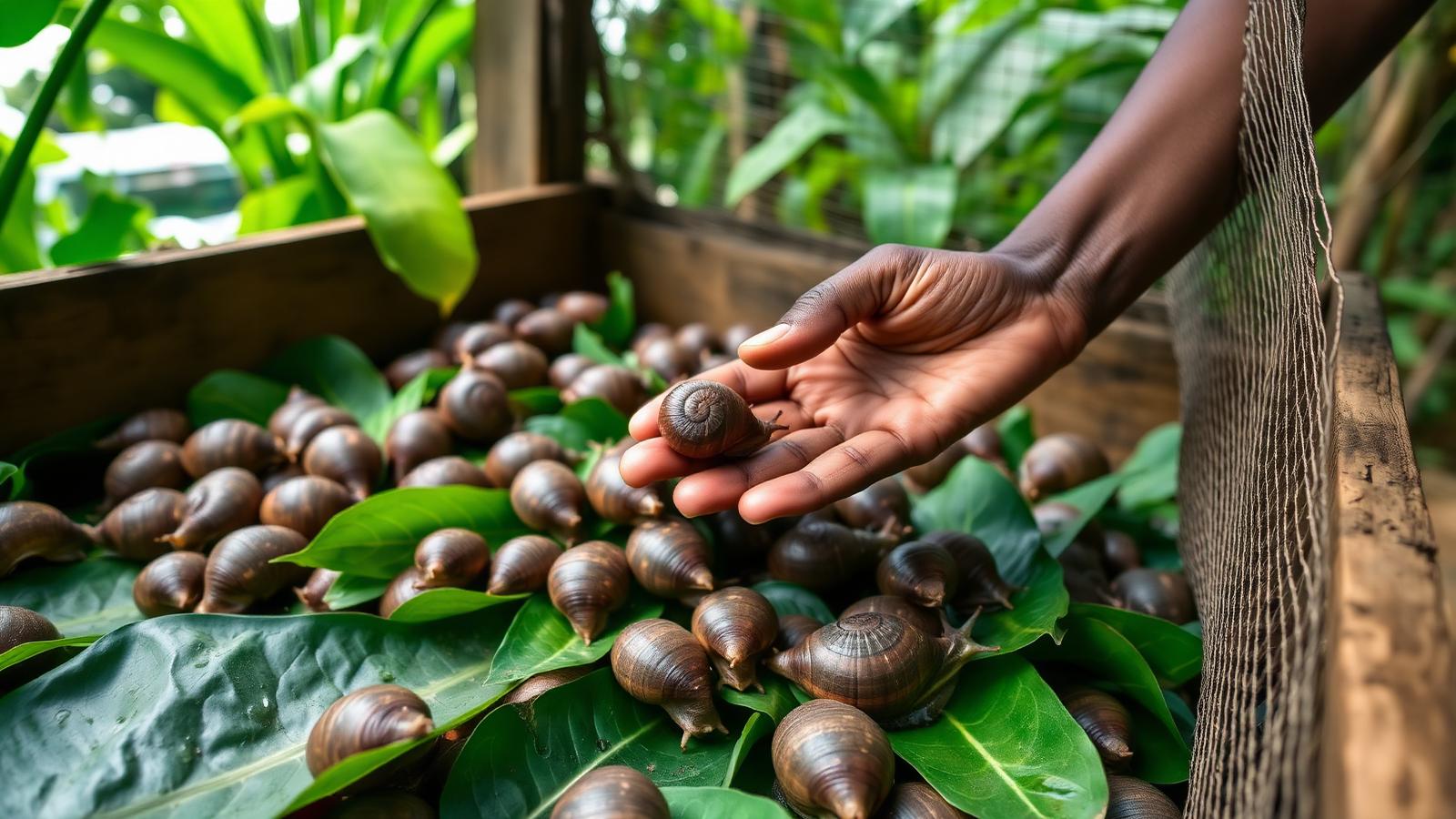
Why snails in Ghana
Snail meat is a delicacy across Ghana, Nigeria, Côte d'Ivoire and increasingly in Europe. Wild collection has crashed - most chop bars and restaurants now struggle to source consistent volume, which is exactly the gap a smallholder farm can fill.
Snail farming (heliciculture) works in Ghana because the climate is naturally humid, feed is essentially free (kitchen scraps and greens), and startup capital is a fraction of poultry or pigs. A backyard pen can turn a profit in the first year.
Species that work
- Achatina achatina (Ghana giant tiger snail) - the largest, most valuable, and highest export demand. Slower to mature (18-24 months to full size) but commands premium prices.
- Achatina fulica - faster growing, matures in 12-14 months, smaller shell. Good for local market volume.
- Archachatina marginata (giant African land snail) - very hardy, mid-size, popular in Nigerian and Ghanaian cuisine.
For a first project, buy 200-300 point-of-lay Achatina achatina or Archachatina marginata from a licensed breeder - not the roadside. Wild snails carry parasites and often carry rotting shells.
Pen design and site
Snails need shade, high humidity (75-95%), stable temperature (22-28°C), and protection from ants, rats, and lizards. Site the pens in the shadiest part of your compound, ideally under plantain or cocoa trees.
- Hutch box (starter): a wooden box 1m x 1m x 0.5m with mesh top, holds 30-50 breeding snails.
- Trench pen: a 3m x 2m sunken pit lined with loose loamy soil, walls of blockwork or wood, mesh cover. Holds several hundred growers.
- Free-range paddock: a fenced garden plot (walls 1m high with an overhanging lip so snails cannot climb out) planted with cocoyam and pawpaw. Lowest management, highest theft risk.
Line the pen with 15-20 cm of moist loamy soil (never sandy or clay), refresh every 3 months. Set the pen legs in cups of water or diesel to block ants - a single ant column can wipe out a pen overnight.
Feed and humidity
Snails eat almost anything green and soft. A workable Ghanaian ration:
- Leaves: pawpaw, cocoyam, cassava, cabbage, lettuce, okro leaves, plantain leaves
- Fruits: pawpaw, banana, mango, watermelon rinds, pineapple offcuts
- Calcium source: crushed oyster shell, eggshell, or limestone in a shallow dish - essential for shell growth
- Water: a shallow dish and daily light spraying to keep humidity high, especially in Harmattan
Never feed salty, oily, or spiced kitchen scraps - salt kills snails. Remove uneaten food every morning to prevent mould and fruit flies.
The 12-month grow-out cycle
Starting from 200 point-of-lay breeders in month 1:
- Month 1-2: acclimatise, feed and hydrate, log egg-laying
- Month 2-4: hatchlings emerge, move to nursery pen
- Month 4-10: growers reach 100-150g each
- Month 10-14: table-size (150-300g) - harvest for market
- Month 14+: retained breeders continue laying for 2-3 years
Achatina achatina takes longer (18-24 months) but sells at premium sizes for export. Archachatina marginata and Achatina fulica are faster and better for local chop-bar volume.
Local and export markets
Indicative 2026 prices in Greater Accra and Kumasi:
- Live table-size snail (150-250g): GH₵ 8-15 each
- Bulk to restaurants and chop bars: GH₵ 25-35 per kg live
- Frozen dressed snail meat (local): GH₵ 90-130 per kg
- Export-grade Achatina achatina (frozen, EU): USD 12-18 per kg FOB
Best local buyers: chop bars, hotels, and supermarkets in Accra, Kumasi and Takoradi. Export requires HACCP-certified processing and volumes most single farms cannot hit alone - join a cooperative if export is the goal.
Startup and cashflow (200 breeders)
Indicative first-year figures for a backyard project:
- Pen construction (2 trench pens + covers): GH₵ 2,500
- 200 point-of-lay breeders at GH₵ 12: GH₵ 2,400
- Soil, calcium, tools, ant control: GH₵ 500
- Feed (mostly free greens + supplements): GH₵ 600 / year
Total startup: about GH₵ 6,000. A single productive pen typically yields 1,500-2,500 marketable snails per year - revenue of GH₵ 15,000-30,000depending on size and channel. Payback inside year one is realistic if breeders stay healthy.
Your next steps
- Buy breeders only from a licensed snail farm - never pick wild snails.
- Build one small pen first, learn a full cycle, then scale. Snail farming punishes shortcuts.
- Set ant barriers (water cups or diesel rings) before you put a single snail in the pen.
- Log egg-laying, hatchlings and mortality in FamRite. Ask questions in AgroChat #snails.
Frequently asked questions
How much does it cost to start snail farming in Ghana?
A backyard project with two trench pens and 200 breeders starts at about GH₵ 6,000, including construction, stock and first-year inputs. It is one of the lowest-capital livestock ventures in Ghana.
Which snail species is best for farming in Ghana?
Achatina achatina (Ghana giant tiger snail) commands the highest export prices but grows slowly. Archachatina marginata and Achatina fulica grow faster and are better for local chop-bar markets.
How long does it take snails to reach market size?
Archachatina marginata and Achatina fulica reach 150-250g table size in 10-14 months. Achatina achatina takes 18-24 months for premium export sizes.
What do snails eat on a Ghanaian farm?
Pawpaw, cocoyam, cassava and cabbage leaves; pawpaw, banana and pineapple offcuts; and a constant calcium source such as crushed oyster shell or eggshell. Never salty, oily, or spiced food - salt kills snails.
What is the biggest killer of farmed snails in Ghana?
Ants are the number one cause of pen wipe-outs. Set ant barriers - water-filled cups or diesel rings under the pen legs - before you put any snails in. Dry Harmattan air is second: mist daily to hold humidity above 75%.
Run your farm with FamRite
Track flocks, log expenses in GH₵, and get answers from the FamRite community - all in one app.