
Poultry Farming in Ghana: A Practical Startup Guide
Everything a first-time Ghanaian poultry farmer needs to know - broiler vs layer, real GH₵ costs, feed conversion, housing, disease pressure, and the cashflow numbers that decide whether the farm survives year one.
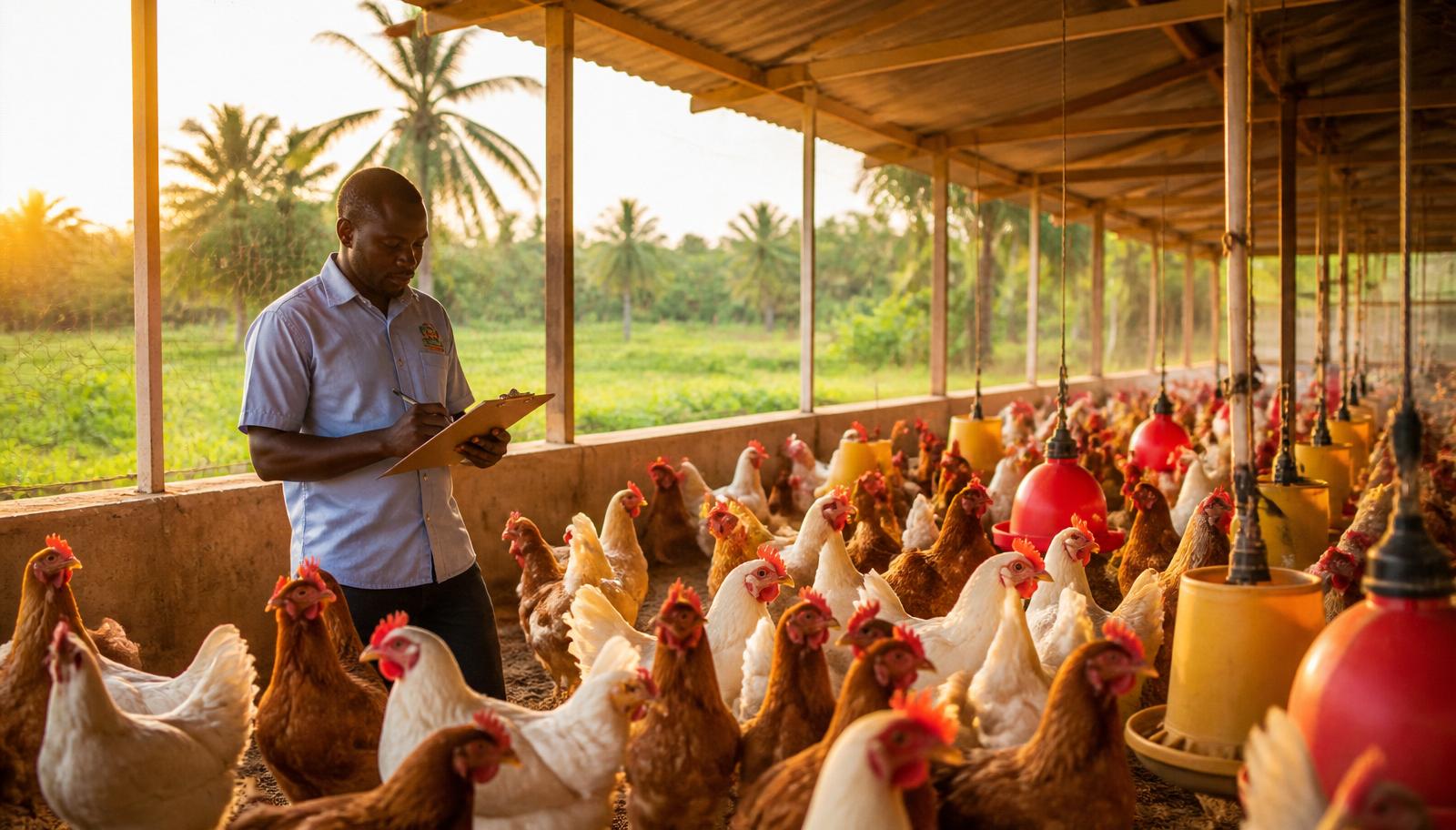
Broiler or layer - pick your model before anything else
Every successful poultry farm in Ghana starts with one decision: are you raising broilers (meat birds) or layers (egg birds)? The two look similar in the coop but run on completely different timelines, cashflow shapes, and risk profiles.
Broilers reach market weight in 6-8 weeks. You buy day-old chicks, feed them hard, and sell live or dressed between 1.8 kg and 2.2 kg. Money moves fast - one flock, one payout - and mortality above 5% kills the batch's profit. Broilers suit farmers who want quick turnover and can time flocks around Easter, Eid, and Christmas.
Layers take 18-20 weeks before the first egg, then produce for 60-72 weeks. Startup is slower and the feed bill runs before any revenue arrives, but once the flock is in lay you have daily cashflow from trays of eggs. Layers suit farmers with patience, working capital, and a route to a steady buyer (school, hotel, wholesaler).
A useful rule: if this is your first flock, start with 200-500 broilers. You will learn feed handling, biosecurity, and market timing in eight weeks instead of eight months.
GH₵ startup costs for a 500-bird broiler flock
Below is a realistic Ghana-market cost sheet for one 500-bird broiler batch in 2026. Prices vary by region and season - Accra and Kumasi run 10-15% higher than rural markets.
- 500 day-old broiler chicks: GH₵ 12-15 per chick ≈ GH₵ 6,500
- Feed (starter + grower + finisher, ~1.9 tonnes): GH₵ 380-420 per 50 kg bag ≈ GH₵ 15,200
- Vaccines & medication (Newcastle, Gumboro, coccidiostat): GH₵ 800
- Bedding (wood shavings), drinkers, feeders: GH₵ 1,200
- Water, electricity, brooding fuel: GH₵ 600
- Labour (one attendant, 8 weeks): GH₵ 2,000
Total variable cost per batch ≈ GH₵ 26,300, or GH₵ 52.60 per bird before housing.
Housing is a one-off. A basic open-sided coop for 500 birds costs GH₵ 8,000-15,000 depending on materials. Once built it runs for 5-8 flocks a year and 6-10 years of life, so amortise it - do not load it onto the first batch.
Housing and stocking density
Ghana's climate is a gift to poultry farmers - most of the year you do not need heating or elaborate ventilation. What you do need is an open-sided coop with a wire mesh perimeter, a raised concrete or well-drained earth floor, and a roof pitched high enough to let heat escape.
Target 10-12 birds per square metre for broilers on litter. Below eight birds per m² you are wasting space; above 14 you will see feather pecking, uneven growth, and higher mortality when Harmattan heat spikes.
Position the long axis east-west so the sun never blasts one wall for a full afternoon. Keep at least 20 metres from the nearest neighbouring flock - Newcastle disease travels on wind, boots, and shared feed sacks.
Feed and feed conversion
Feed is 65-70% of your total cost. The number that decides your profit is FCR (feed conversion ratio) - kg of feed to produce 1 kg of live bird. A well-run broiler flock in Ghana hits FCR 1.8-2.0. Poorly managed flocks drift to 2.4-2.6, which usually erases the entire profit margin.
Feed by phase, not by habit:
- Starter (day 1 to day 14) - 22-23% protein, high energy, crumble form.
- Grower (day 15 to day 28) - 20% protein, pellet form.
- Finisher (day 29 to slaughter) - 18-19% protein.
Weigh a random sample of 20 birds weekly. If average weight lags the target growth curve by more than 10%, check drinker flow, feeder space, and bedding moisture before you blame the feed.
Diseases you will actually see
Four diseases account for most poultry losses in Ghana. Learn them, vaccinate for them, and you avoid 80% of catastrophic flock deaths.
- Newcastle disease - the number one killer. Vaccinate at day 7 (I-2 or Lasota), boost at day 21, and repeat every 8-10 weeks for layers.
- Gumboro (Infectious Bursal Disease) - vaccinate at day 14 and day 21. Suppresses immunity, so unvaccinated flocks lose birds to everything else too.
- Coccidiosis - use a coccidiostat in the feed for the first four weeks; watch for blood-tinged droppings.
- Fowl pox - vaccinate layers at week 6-8; mosquito control around the coop helps.
Biosecurity is cheaper than any drug. A footbath at the coop door with fresh disinfectant weekly, dedicated boots inside, and no visits from other poultry farmers straight into your flock will do more for survival rates than an expensive vet call later.
Market prices and timing
A live 2 kg broiler in Ghana sells for GH₵ 90-130 depending on region and season. The same bird dressed and packaged retails at GH₵ 130-180. Prices spike 20-40% in the two weeks before Easter, Eid al-Fitr, Eid al-Adha, and Christmas.
Time your day-old chick purchase so slaughter lands 5-10 days before a festive weekend. A farmer who slaughters on the wrong side of Christmas can lose GH₵ 20 per bird against a farmer who landed the batch on time.
For layers, a crate of 30 eggs wholesales at GH₵ 42-55. Sell direct to schools, hotels, and pastry shops - the wholesale chain takes GH₵ 8-12 per crate that could stay on your farm.
Year-one cashflow: what the numbers really look like
Take the 500-bird broiler farm above. Assume 4% mortality (20 birds lost), 480 birds sold live at an average GH₵ 100 = GH₵ 48,000 revenue. Variable cost of GH₵ 26,300 leaves GH₵ 21,700 gross margin per batch.
A well-run coop turns 5 batches a year (each cycle is ~9 weeks including cleaning and rest). Gross annual margin: ~GH₵ 108,500. Subtract housing amortisation (GH₵ 1,500), permits, and marketing, and net income lands around GH₵ 95,000-100,000.
That is the good scenario. The bad scenario - a Newcastle outbreak that takes 40% of one flock, or a feed price spike nobody hedged - drops the year to GH₵ 40,000 or less. The gap between the two is entirely down to management, not luck.
Your next steps
Before you buy a single chick, do three things:
- Visit two working poultry farms in your area. Ask about mortality, feed source, and their worst month.
- Line up your buyer. A market woman, a hotel, or a school with a signed weekly order beats hoping to sell at the gate.
- Set up a simple record system. Every bird lost, every bag of feed, every vaccine - written down from day one.
FamRite handles that last step. Log flocks, expenses, and vaccinations in the app, watch your FCR in real time, and get answers from other Ghanaian poultry farmers in the AgroChat #poultry and #ask-a-vet rooms.
Frequently asked questions
How much capital do I need to start a poultry farm in Ghana?
For a 500-bird broiler flock you need around GH₵ 26,000 in variable cost per batch, plus a one-off GH₵ 8,000-15,000 for basic housing. First-time farmers should start with 200-300 birds and expect to invest GH₵ 12,000-18,000 for the first batch including a simple coop.
Is broiler or layer farming more profitable in Ghana?
Broilers turn cash faster - a 500-bird flock can net GH₵ 20,000+ in 8 weeks. Layers earn less per week but produce for 60+ weeks and give daily cashflow. If you need money to circulate, broilers win. If you can wait 5 months for revenue, layers give a smoother year.
What is a good feed conversion ratio for broilers in Ghana?
Target FCR between 1.8 and 2.0 - meaning 1.8 to 2 kg of feed to produce 1 kg of live bird. Well-managed farms hit 1.9; anything above 2.3 usually erases the profit margin.
Which vaccines do broilers need in Ghana?
At minimum: Newcastle disease at day 7 (boosted at day 21), and Gumboro at day 14 and day 21. Add a coccidiostat in the feed for the first four weeks. For layers add fowl pox at week 6-8 and repeat Newcastle boosters every 8-10 weeks.
When are poultry prices highest in Ghana?
Prices rise 20-40% in the two weeks before Easter, Eid al-Fitr, Eid al-Adha, and Christmas. Time your day-old chick purchases so slaughter lands 5-10 days before those weekends for the best margin.
Run your farm with FamRite
Track flocks, log expenses in GH₵, and get answers from the FamRite community - all in one app.